
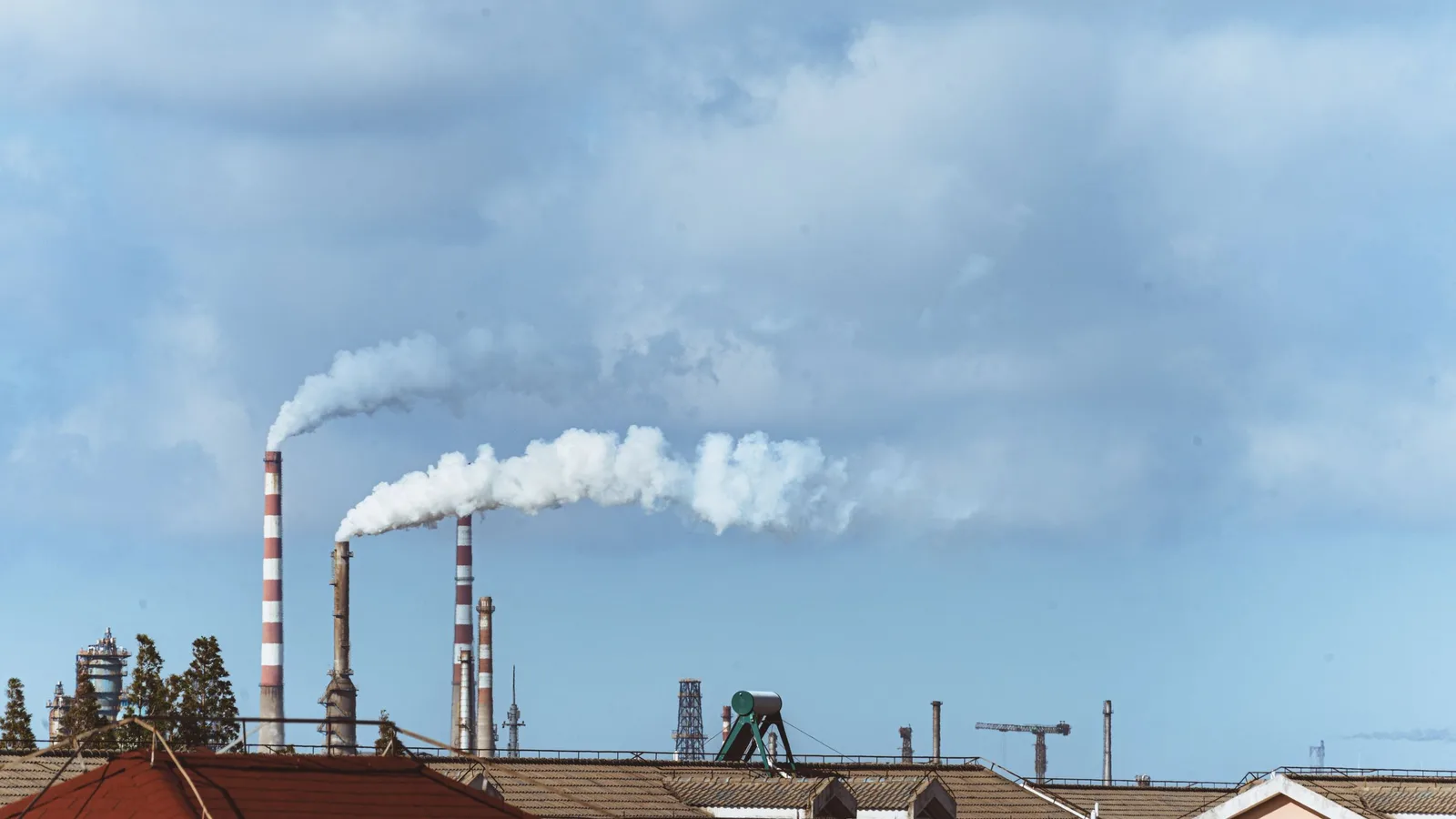
Calculating a carbon footprint means measuring the greenhouse gas emissions a company causes over a year, expressed in carbon dioxide equivalent (CO2e). The most widely used method is the Greenhouse Gas Protocol (GHG Protocol) corporate standard: emissions are split into Scope 1 (direct), Scope 2 (purchased energy) and Scope 3 (value chain), and are mostly calculated with the formula "activity data × emission factor".
The method has become the de facto standard. According to the GHG Protocol, in 2016, 92% of Fortune 500 companies responding to CDP used the protocol directly or indirectly. In Türkiye, companies in scope of the Turkish Sustainability Reporting Standards (TSRS) report greenhouse gas emissions too; under the decision of the Public Oversight Authority (KGK), only Scope 3 disclosure is optional, and only for the first two annual reporting periods.
In short:
- The corporate standard covers six gases: CO2, methane, nitrous oxide, HFCs, PFCs and SF6 (GHG Protocol).
- Formula: emissions = activity data × emission factor; gases other than CO2 are converted to CO2e using their global warming potential (GWP).
- Scope 3 has 15 categories; because its data comes largely from suppliers and customers, it is the hardest part to measure.
What is a corporate carbon footprint?
A corporate carbon footprint is an inventory of the greenhouse gas emissions caused by an organisation's activities. The GHG Protocol corporate standard covers the accounting and reporting of the six gases under the Kyoto Protocol. An inventory starts with two boundary decisions: which companies and sites are included (the organisational boundary, using the equity share or control approach) and which emission sources are counted (the operational boundary, i.e. the scopes).
The standard asks that the inventory rest on five principles: relevance, completeness, consistency, transparency and accuracy. In practice this means documenting the calculation well enough for a third party to reproduce it.
What are Scope 1, Scope 2 and Scope 3?
- Scope 1 – direct emissions: emissions from sources the company owns or controls. The standard lists four source types: stationary combustion (boilers, furnaces, turbines), mobile combustion (company vehicles), process emissions (e.g. calcination in cement) and fugitive emissions (e.g. HFC leaks from refrigeration and air-conditioning equipment).
- Scope 2 – purchased energy: indirect emissions from generating the electricity, steam, heat and cooling a company buys. According to the standard, almost every business has Scope 2 emissions.
- Scope 3 – value chain: other indirect emissions from upstream and downstream activities not covered by Scopes 1 and 2. The Scope 3 Standard, released in 2011, groups them into 15 categories.
In the order used in the GHG Protocol's Scope 3 calculation guidance, the 15 categories are: purchased goods and services; capital goods; fuel- and energy-related activities; upstream transportation; waste generated in operations; business travel; employee commuting; upstream leased assets; downstream transportation; processing of sold products; use of sold products; end-of-life treatment of sold products; downstream leased assets; franchises; investments.
What is the carbon footprint calculation formula?
According to the GHG Protocol, direct measurement of emissions is not common; the most common approach is to apply documented emission factors. An emission factor is the ratio between the quantity of an activity and the emissions it causes. The basic formula:
Emissions (kg CO2e) = Activity data × Emission factor (× GWP)
- For Scope 1, activity data is mostly the quantity of fuel purchased (natural gas, diesel).
- For Scope 2, it is metered electricity consumption.
- For Scope 3, it can be fuel use, passenger-kilometres, the mass of goods purchased or the amount spent.
The standard recommends source- or facility-specific factors over generic ones where available. The Scope 3 guidance defines four methods for purchased goods and services, for example: supplier-specific, hybrid, average-data and spend-based; the spend-based method converts the economic value of purchases into emissions using secondary emission factors.
CO2e conversion: gases other than CO2 are multiplied by their global warming potential (GWP). According to the GHG Protocol table updated in August 2024, the recommended IPCC AR6 100-year GWP values are 1 for CO2, 27.0 for non-fossil methane, 29.8 for fossil methane, 273 for nitrous oxide and 24,300 for SF6. For example, if a 2 kg leak of HFC-32 (GWP 771) is found during maintenance, that is 2 × 771 = 1,542 kg CO2e of Scope 1 emissions.
Why is Scope 2 calculated in two ways?
The GHG Protocol's Scope 2 Guidance of 2015 defines two methods. The location-based method reflects the average emissions intensity of the grid where consumption occurs. The market-based method reflects the electricity a company has deliberately chosen; its factor comes from contractual instruments such as renewable energy certificates or direct purchase contracts. Companies operating in markets where such instruments exist must report Scope 2 both ways, which is called "dual reporting". The GHG Protocol held a public consultation on the Scope 2 Guidance from October 2025 to January 2026, so the current text should be followed in case the method changes.
Who does greenhouse gas reporting affect in Türkiye?
Under KGK's TSRS scope decision, companies in scope do not have to disclose Scope 3 emissions in the first two annual reporting periods in which they apply TSRS; the decision grants this transitional relief for Scope 3 only. According to KGK's announcement of 30 July 2026, the ISSB's amendments to IFRS S2 have been carried into TSRS 2: a competent authority or stock exchange may require a different measurement method, and additional disclosure requirements apply to Scope 3 category 15 (investments). The amendments apply to periods beginning on or after 1 January 2027. For the scope rules, see what is ESG. This article is not legal advice.
Where should a carbon footprint calculation start?
The sequence below is a practical checklist based on the GHG Protocol's five steps (identify sources, select a method, collect data and factors, calculate, roll up to corporate level):
- Set the boundary and base year: Which sites, which year? Later years will be compared with it.
- Start with Scopes 1 and 2: Natural gas and fuel invoices, fleet records, refrigerant maintenance forms and electricity meters already exist in most companies.
- Record the factor source: Document the source, year and GWP version (AR5 or AR6) of each factor; otherwise year-on-year comparison breaks down.
- Prioritise Scope 3 categories: Estimate large items such as purchased goods and services, transportation and use of sold products with the spend-based method first, then refine with supplier data.
Conclusion: is a carbon footprint calculated only once?
A corporate carbon footprint is the calculation of Scope 1, 2 and 3 emissions from activity data and emission factors, converted to CO2e. Calculated once and left on the shelf, it creates little value; as a yearly, well-documented inventory it becomes the basis for reduction targets and TSRS reporting. A practical start is to collect complete Scope 1 and 2 data in the first year, record factor sources and rank Scope 3 categories by importance. For the global context, see the Sustainable Development Goals.
"Corporate Carbon Footprint and Greenhouse Gas Management" is part of Orient Global's corporate training catalogue; details are on the sustainability page.
This article is for general information only and is not legal advice. GHG Protocol is a trademark of its respective owners.
#interimmanagement #forwarddeployedengineering #carbonfootprint #ghgemissions #sustainability