
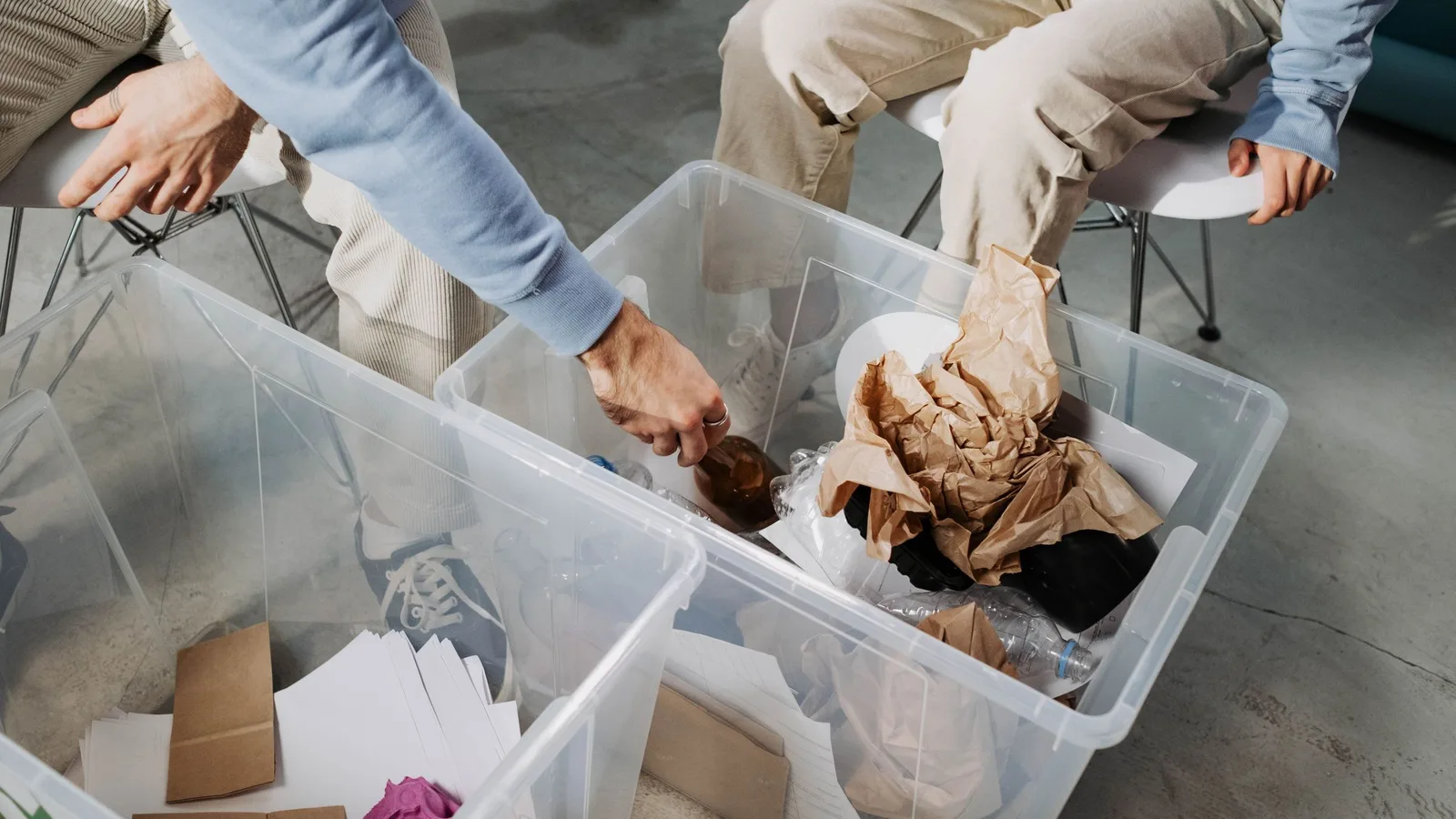
A circular economy is a model of production and consumption in which products and materials are kept in use through repair, reuse and recycling instead of being thrown away after use. The Ellen MacArthur Foundation defines it as a system where materials never become waste and nature is regenerated; it is the opposite of the linear "take, make, waste" model.
In the European Union, this shift is still at an early stage. According to Eurostat, 12.2% of the materials used in the EU in 2024 came from recovered material; the European Commission aims to double this rate to 24% by 2030. In Türkiye, the economic value generated per kilogram of material consumed is roughly half the EU average.
In short:
- The three principles of a circular economy: eliminate waste and pollution, circulate products and materials at their highest value, and regenerate nature (Ellen MacArthur Foundation).
- Resource efficiency means creating more value from the same amount of material; it is the measurable business side of a circular economy.
- According to the European Commission, up to 80% of a product's environmental impact is determined at the design stage; circularity starts with design, not with recycling.
What is a circular economy and how is it different from a linear economy?
In a linear economy, raw materials are extracted, products are made, used and discarded. Türkiye's Green Deal Action Plan, published by the Ministry of Trade, describes this as a model built on producing, using and discarding products, and defines the circular economy as an approach in which the value of a product is preserved by returning materials to the product cycle after use and waste is kept to a minimum. The plan also describes it as a system in which raw material costs fall and resource efficiency is achieved.
The short answer to the frequently searched question "what is the circular economy model" lies in this difference: in the linear model, value ends when the product is sold; in the circular model, products, parts and materials stay in use for as long as possible and at their highest value. Recycling is the last link in that chain; prevention, repair, reuse and remanufacturing come before it.
What are the principles of a circular economy?
The Ellen MacArthur Foundation sets out three principles, all driven by design:
- Eliminate waste and pollution: waste is treated not as an outcome to manage after it appears but as something that can be prevented at the design stage.
- Circulate products and materials at their highest value: maintenance, repair, reuse and remanufacturing come before melting materials down and reprocessing them.
- Regenerate nature: the aim is not only to reduce harm to natural systems but to strengthen them.
The European Commission's approach also focuses on design. According to the Commission's circular economy page, up to 80% of a product's environmental impacts are determined at the design stage. This is why the EU's second Circular Economy Action Plan, adopted in March 2020, highlights value chains such as packaging, batteries, textiles and end-of-life vehicles. For the digital sharing of product information, see our article on the digital product passport.
How widespread is the circular economy?
Eurostat's "circular material use rate" measures how much of the material used in an economy comes from recovered material. In the EU, the rate was 11.6% in 2018 and 12.2% in 2024, an increase of less than one percentage point in six years. The gap between countries is large: in the same year the rate was 32.7% in the Netherlands, 21.6% in Italy and 14.8% in Germany. The Commission's page presents the goal of raising Europe's circularity rate to 24% by 2030 as part of the Clean Industrial Deal, and notes that a Circular Economy Act, due for adoption in 2026, aims to create a single market for secondary raw materials.
Eurostat's circularity indicator does not include Türkiye. Comparable data for Türkiye is available in the resource productivity indicator.
What does resource efficiency deliver for companies?
Resource productivity is the value an economy generates per kilogram of material it consumes. According to Eurostat, in chain-linked volumes at 2015 prices, it was EUR 1.16 per kilogram in Türkiye and EUR 2.37 in the EU in 2024. In Türkiye the indicator rose from EUR 1.03 in 2019 to EUR 1.16 in 2024, but the same amount of material still generates about half the value of the EU average.
At company level, this picture can be read under the headings below. This list is not a sourced measurement but a framework showing how circular economy principles translate into business processes:
- Raw material and waste costs: producing the same output with less material reduces both purchased raw material and waste sent for disposal. The Ministry of Trade's plan also describes the circular model as one in which raw material costs fall.
- Supply risk: recovered or reused material can reduce dependence on a single raw material source.
- Customer and market expectations: the European Commission is introducing new rules for value chains such as packaging, batteries and textiles; for companies selling these products into the EU, material and recycling information may become increasingly important.
- New revenue models: services such as repair, refurbishment, spare parts and leasing keep the customer relationship going after the sale.
- Data-driven management: efficiency cannot be claimed without measuring material flows; a circularity project often produces a company's first regular material and waste data.
Where should companies start with the circular economy?
The steps below are not a sourced standard but a checklist that can be used as a starting point:
- Map material flows: list the five materials you buy most and the five waste types you generate most, with quantities.
- Find where waste comes from: track scrap, packaging, defective products and returns separately.
- Bring design to the table: make repairability, number of parts and material separability criteria in new product and packaging decisions.
- Link to regulation: handle waste separation in offices and sites together with Türkiye's zero waste certificate process, and requirements for products sold into the EU within the European Green Deal framework.
Conclusion
A circular economy aims to avoid creating waste before recycling it, and to preserve the value of products for as long as possible. Even in the EU, the circularity rate is around 12% and rising slowly; in Türkiye, resource productivity lags behind the EU average. That gap is an area of cost and market advantage for companies that measure their materials and link them to design decisions. A good first step is to choose one product or site and measure its material and waste flows regularly for three months, which gives a solid basis for later decisions.
"Circular Economy and Resource Efficiency" is part of Orient Global's corporate training catalogue; details are on the sustainability page.
This article is for general information only.
#interimmanagement #forwarddeployedengineering #circulareconomy #resourceefficiency #sustainability