
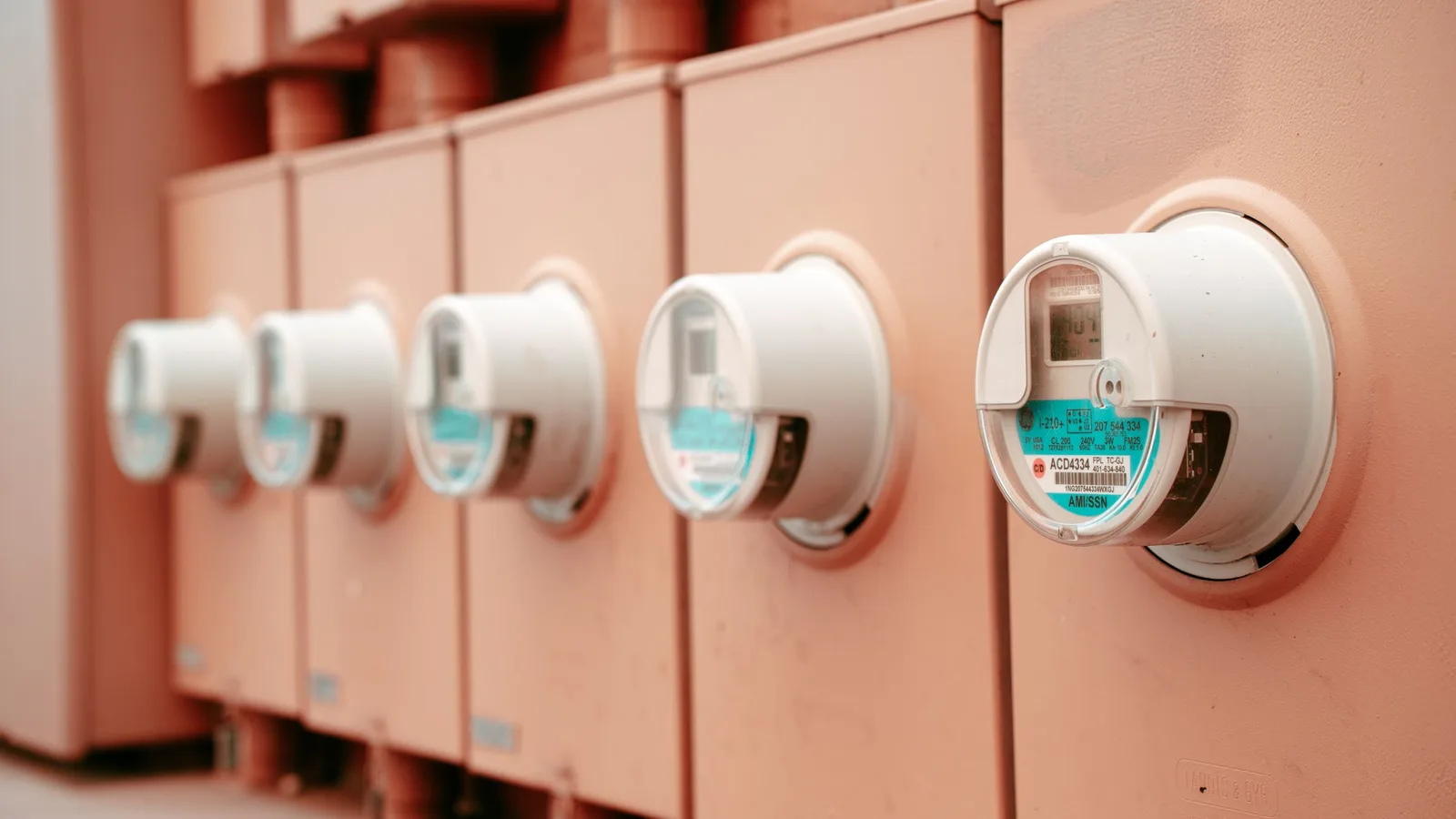
Sustainability performance indicators are numerical measures that let a company track environmental impacts such as energy, water and greenhouse gases in measurable units: megawatt-hours (MWh), cubic metres (m³) and tonnes of CO2 equivalent. The two most widely used frameworks, the GRI Standards and the EU's European Sustainability Reporting Standards (ESRS), ask for all three areas both as absolute amounts and as intensity indicators (per unit of revenue).
The frameworks are also changing. According to GRI, the new GRI 103: Energy 2025 becomes mandatory for all energy reporting published on or after 1 January 2027, replacing GRI 302 from 2016. Under ESRS, water intensity is defined as total water consumption in a company's own operations in cubic metres per million euros of net revenue.
In short:
- Energy, water and carbon indicators are linked; much of the carbon calculation is derived from energy data.
- Each indicator is tracked both as an absolute value (MWh, m³, tonnes CO2e) and as an intensity value (ESRS E1, E3).
- The real work is not the calculation but agreeing up front on the data's source, boundary and owner.
What is a sustainability performance indicator and why does it matter?
A performance indicator is a regular measurement that shows how close a company is to a target. In sustainability, two types are used together. Absolute indicators give the total impact: annual energy consumption, water withdrawn, total greenhouse gas emissions. Intensity indicators divide that impact by the volume of activity, so that the efficiency of a growing company can be compared over time.
The concept of intensity is also defined in Turkish law: Energy Efficiency Law No. 5627 defines energy intensity as the amount of energy consumed to produce one unit of output. The ISO 50001 energy management standard proposes a similar cycle: set a policy, fix targets, base decisions on data, measure results and improve continually.
Indicators give customers, lenders and auditors a single verifiable answer to the questions they ask. A target without an indicator cannot be measured, and so cannot be managed.
How is energy data collected, and which indicators are tracked?
Disclosure E1-5 of ESRS E1 (climate change) requires a company to report its energy consumption and energy mix. According to the calculation guidance, energy consumption must be reported using the same organisational boundary as Scope 1 and 2 greenhouse gas emissions. The same standard also requires energy intensity in MWh per net revenue for activities in high climate impact sectors.
In practice, the sources of energy data are well known: electricity and natural gas invoices, meter readings, fuel purchase records and fleet fuel cards. The difficulty is that this data is held in different units (kWh, m³, litres) and by different departments. The first step is a single table that converts everything into one energy unit, usually MWh, and documents the source.
In Türkiye, responsibility for energy data is often set by law as well. Under Law No. 5627, industrial enterprises appoint an energy manager from among their employees, and private-sector industrial enterprises with annual energy consumption of 50,000 TOE (tonnes of oil equivalent) or more set up an energy management unit under the energy manager. The current legislation should be checked for scope and thresholds; this article is not a substitute for legal advice.
How is water data measured?
GRI 303: Water and Effluents 2018 (in effect since 1 January 2021) organises water data into three core disclosures: water withdrawal (303-3), water discharge (303-4) and water consumption (303-5). Values are reported in megalitres, and facilities in areas with water stress are reported separately. According to the standard, if water consumption cannot be measured directly, it can be calculated as total water withdrawal minus total water discharge.
Disclosure E3-4 of ESRS E3 (water and marine resources) asks for total water consumption in m³, consumption in areas at water risk, water recycled and reused, and water stored. The same disclosure also asks whether the data is measured, estimated or modelled.
This last requirement matters in practice. At many sites water is measured only at the main meter, and consumption by process is estimated. If it is not recorded which value is measured and which is estimated, year-on-year comparisons lose their reliability.
How is carbon data derived from energy data?
Disclosure E1-6 of ESRS requires a company to report its gross Scope 1, Scope 2 and Scope 3 greenhouse gas emissions and its total emissions in tonnes of CO2 equivalent. The same standard also requires GHG intensity per net revenue, given as two separate values: location-based and market-based.
A large part of the carbon calculation rests directly on energy data: fuel burned on site determines direct emissions, and purchased electricity determines indirect emissions. In both cases, the calculation is consumption multiplied by an emission factor. If the energy data is incomplete or wrong, the carbon figure will be wrong too. In Türkiye, the emission factors used for electricity are published annually by the Ministry of Energy and Natural Resources.
How should sustainability data be managed?
The steps below are not a sourced standard but a checklist for getting started with data management:
- Fix the boundary and the period. Which sites, which vehicles, which year? Using the same boundary for energy and carbon is also what ESRS expects.
- Build a single data dictionary. For each indicator, write down the unit, source document, calculation method and owner.
- Separate measured from estimated. Mark next to each value whether it is measured or estimated.
- Link intensity to financial data. The revenue used in intensity indicators should reconcile with the figure in the financial statements; ESRS explicitly requires this reconciliation.
- Track monthly. Data collected at year end comes too late to fix errors; a monthly table shows deviations early.
- Follow changes in the framework. On 3 July 2026, the European Commission adopted a delegated act simplifying the ESRS regulation 2023/2772. The indicator set should be checked against the current text.
Clear data ownership and definitions matter as much in sustainability as in AI projects; see our article on data governance.
Conclusion: where to start?
Sustainability performance indicators may look complex, but the foundation is three tables: energy, water and the carbon derived from them. First bring your invoices and meter data into one structure, fix the units and assign an owner to each value; choosing a reporting framework becomes easier after that. Orient Global's sustainability training catalogue includes the topic "Sustainability Data Management and Performance Indicators".
This article is for general information only and is not a substitute for legal advice. GRI, ISO and related names are trademarks of their respective owners.
#interimmanagement #forwarddeployedengineering #sustainability #esg #energyefficiency #watermanagement #carbon